What Is an OBD2 Scanner, and Do You Actually Need One?
That little socket under your dashboard can tell you why the check engine light is on. Here's what a scanner reads, what it costs, and who really benefits.

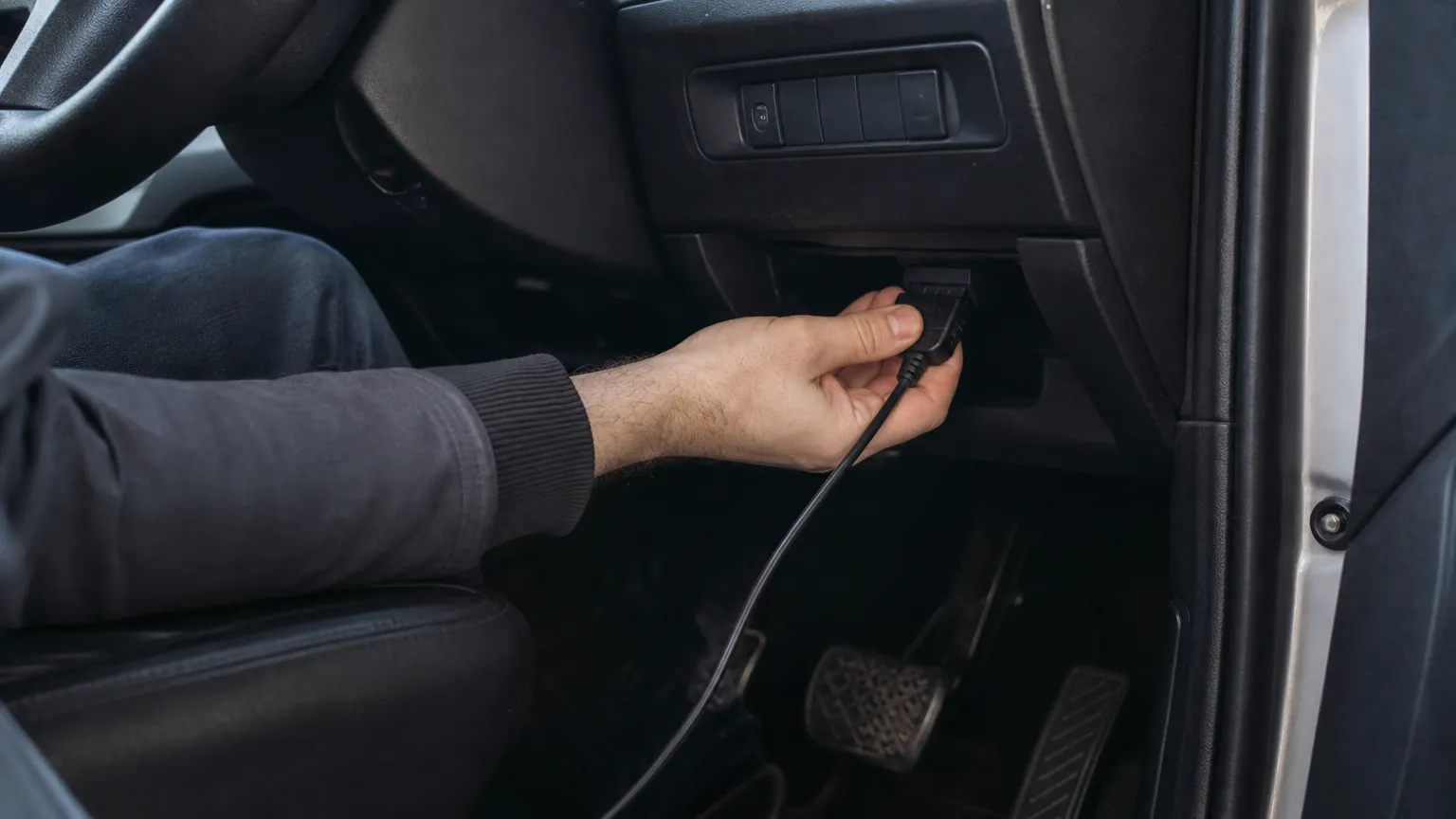
The check engine light comes on, and your stomach drops a little. Is it something serious, or a loose gas cap? For decades the only way to find out was to book the car in and let a garage plug in its equipment. Today you can buy a tool that does the first part of that job yourself, often for the price of a tank of fuel. These tools are called OBD2 scanners, and they read the data your car's computer is already recording. This guide explains what the port is, what a scanner can and can't tell you, the real differences between the cheap and the expensive options, and whether you actually need one at all.
What the OBD2 port is
OBD stands for On-Board Diagnostics. Modern cars run dozens of small computers that monitor the engine, emissions system, transmission and more. When something falls outside the expected range, the system stores a fault code and, in many cases, turns on a warning light. The OBD2 port is the standardized socket that lets you read those codes.
It's a 16-pin trapezoid-shaped connector, almost always within reach of the driver's seat: under the dashboard near the steering column, behind a small cover, or sometimes near the fuse box. If you've never noticed it, that's normal. Most people go years without looking.
The "2" matters because it marks the point where the standard became consistent across brands. Before that, every manufacturer did its own thing. Rough timing for when OBD2 (or the equivalent EOBD) became mandatory:
- United States and Canada: all new cars and light trucks from the 1996 model year.
- European Union and the UK: petrol cars from 2001, and diesel cars from 2004.
- Australia: petrol cars from around 2006, with diesels following a few years later.
So if your car is newer than those dates for your region, it almost certainly has a compatible port. Very old classics won't, and some fully electric cars expose less through the standard port because much of their data sits outside the emissions-focused OBD2 rules.
What a scanner can and can't read
A scanner talks to your car through that port and pulls back information. What you get depends on the tool, but the common features are worth understanding.
What most scanners can do
- Read fault codes. These are short alphanumeric codes like P0420. The P means powertrain; the numbers point to a specific area. A scanner shows the code and usually a plain-English description.
- Clear codes and turn off the light. Useful after you've fixed something, so you can confirm the problem doesn't come straight back.
- Check readiness status. This tells you whether the car's self-tests have completed. It matters before an emissions test, because an inspection station may fail a car that isn't "ready."
- Show live data. Many tools display real-time readings such as engine temperature, engine speed in RPM, and sensor voltages.
What a scanner can't do
This is where honesty matters. A fault code tells you where the car noticed a problem, not what the fix is. A code pointing at an oxygen sensor doesn't always mean the sensor is broken; it can mean a wiring fault, a leak upstream, or something else entirely. The scanner narrows the search. It doesn't do the diagnosis for you.
Basic scanners also tend to cover engine and emissions systems only. Faults in airbags, ABS brakes, and manufacturer-specific systems often need a more capable tool or dealer-level software. And no scanner repairs anything. It reads and clears codes; your hands, or a mechanic's, do the rest.
One safety point worth stating plainly: clearing a code does not fix the underlying fault. If a warning light relates to brakes, airbags, steering, or an overheating engine, treat it as a reason to stop and get professional help rather than something to reset and ignore. The same goes for any flashing check engine light, which commonly indicates a misfire that can damage the catalytic converter if you keep driving.
The three kinds of scanner
Scanners fall into three broad groups. They overlap, but the distinction helps you avoid overpaying or underbuying.
Basic code reader
A small handheld unit with a screen and a few buttons. You plug it in, read the codes, and clear them if you want. No phone needed, nothing to pair. These are simple and reliable for their narrow job. The cheapest ones show raw codes with little explanation; slightly better ones include descriptions and basic live data.
Bluetooth adapter with a phone app
A small dongle that stays plugged into the port and sends data to an app on your phone over Bluetooth. The hardware is cheap because the screen and the brains live on your phone. The experience depends heavily on the app. Free apps cover the basics; paid apps or subscriptions unlock live dashboards, logging, and sometimes extra systems.
A word of caution here. Leaving a dongle permanently plugged in can, on some cars, draw a small amount of power and contribute to a flat battery over weeks of inactivity. It's also a physical device inside your car's network, so it's sensible to buy from a known brand and unplug it when not in use. Treat very cheap no-name dongles with some skepticism about both reliability and security.
Full diagnostic tool
A larger handheld or tablet-style device aimed at serious DIYers and small workshops. These read beyond the engine into ABS, airbags, and manufacturer-specific modules, and some can perform active tests and resets. They cost far more and have a steeper learning curve, which is why most households don't need one.
| Type | What it does | Who it suits | Typical price (USD) |
|---|---|---|---|
| Basic code reader | Reads and clears engine/emissions codes; some show live data | Occasional use, first-time owners | Around $20 to $60 |
| Bluetooth adapter + app | Codes, live data, dashboards via your phone; quality varies by app | DIYers comfortable with a phone app | Around $25 to $80 for the dongle, plus any app cost |
| Full diagnostic tool | Engine plus ABS, airbags, module-specific tests and resets | Keen DIYers, small garages | Around $150 to $1,000+ |
Prices shift with exchange rates, but as a rough guide a basic reader lands near £20 to £50 or about A$40 to A$90, and capable mid-range tools sit well above that. There's no ongoing running cost in electricity terms; these draw tiny amounts of power and are used briefly, so there's no meaningful kWh calculation to do.
Who actually gets value from one
A scanner is not a must-have for everyone. If your car is new, under warranty, and problem-free, you can happily leave diagnostics to the dealer. The people who get genuine value tend to fall into three groups.
- Owners of cars out of warranty. Once you're paying for your own repairs, knowing why the light is on helps you decide whether to act now or book ahead, and it makes conversations with a garage less one-sided.
- DIYers. If you already change your own oil, brake pads, or filters, a scanner closes the loop by letting you confirm a repair cleared the fault.
- Used-car buyers. Plugging in before you buy can reveal stored codes and whether the emissions readiness monitors have been recently reset, which sometimes hints that a seller cleared a warning light just before the viewing. It's not a substitute for a full inspection, but it's a quick, honest check.
Keep expectations realistic. A scanner gives you information and a starting point. For anything involving safety systems, or a fault you can't confidently interpret, a professional diagnosis is still the better call. The tool pays for itself not by replacing the garage, but by helping you walk in informed and avoid a wasted trip.
The short version
- The OBD2 port is a standard socket under the dash, present on US cars from 1996, EU and UK petrol cars from 2001, and most Australian petrol cars from around 2006.
- A scanner reads and clears fault codes and shows live data, but it tells you where to look, not exactly what to fix.
- Choose a basic reader for occasional use (around $20 to $60), a Bluetooth dongle plus app for DIY convenience, or a full tool only if you go deep.
- Out-of-warranty owners, DIYers, and used-car buyers get the most value; new-car owners usually don't need one.
- Never just clear a light and keep driving: brake, airbag, steering, overheating, or flashing engine warnings mean stop and get professional help.
Daniel Hart
Editor, Car & Garage · Columbus, Ohio
Daniel edits the Car & Garage section. He writes about the plug-in scanners, dash cams and chargers that help drivers understand their cars and avoid unnecessary repair bills, and he is clear about when a professional mechanic is still the right call.
Keep reading
Hidden Car Features: What 'Coding' Can Unlock on VW, Audi and BMW
Many German cars ship with features switched off in software. Here is what coding through the OBD port can turn on, and the risks worth knowing first.
Engine Warning Light On? What to Do in the First 10 Minutes
The engine warning light just came on. Here is how to tell a loose fuel cap from a problem that means stopping the car right now.
Buying a Used Car? How a Cheap Scanner Can Help
A plug-in scanner costing around $25 to $50 can reveal hidden faults and recently cleared warning lights before you hand over your money.
Comments
No comments yet. Share your experience or ask a question.