White Noise Machines vs Sleep Apps: Which Is Worth It?
White noise, pink noise, brown noise and the apps that promise better sleep: here's what the evidence supports and where your money actually goes.

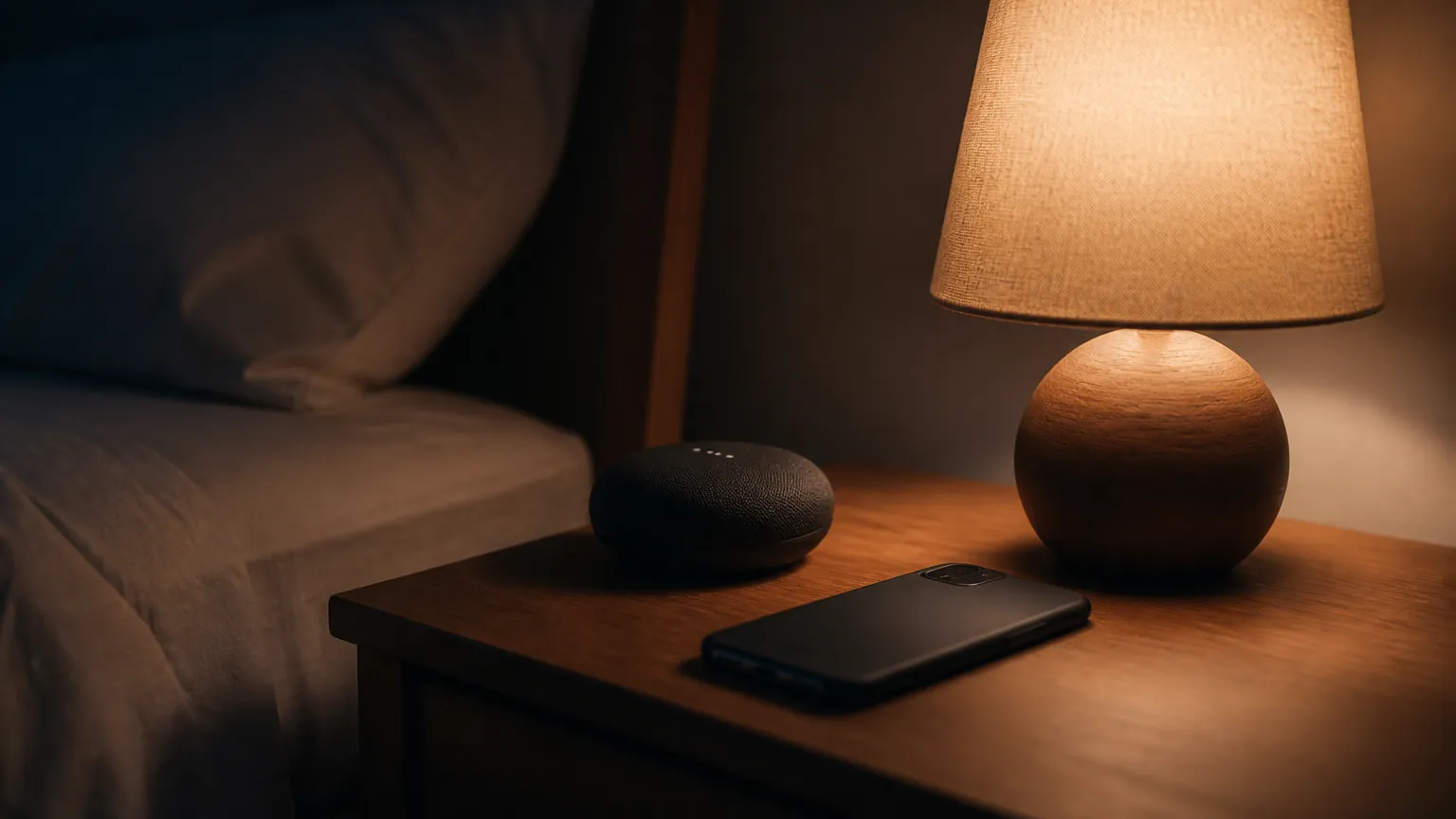
If you share a wall with a noisy neighbor, sleep near a busy road, or simply find silence unsettling, you have probably considered either a white noise machine or a sleep app. Both promise to help you drift off and stay asleep by covering up the sounds that jolt you awake. But one is a small box that does a single job, and the other lives on the phone you may be trying to keep out of the bedroom. This guide walks through the types of sound, what the research actually supports, the safety points that matter (especially around babies), and the real-world costs, so you can decide what, if anything, is worth paying for.
White, pink and brown noise: what the labels mean
These color names describe how sound energy is spread across the frequencies you can hear. They are not marketing inventions, though marketing has certainly borrowed them.
- White noise contains equal energy at every frequency. To most ears it sounds like radio static or a harsh hiss. It is good at masking a wide range of sounds, but some people find the high-frequency content a little sharp.
- Pink noise has more energy in the lower frequencies and tapers off as the pitch rises. It sounds softer and fuller, often compared to steady rain or wind through trees. Many people find it more comfortable than white noise for long listening.
- Brown noise (sometimes called red noise) rolls off even more steeply, so the low end dominates. It sounds like a deep, steady rumble, closer to a distant waterfall or heavy surf.
In practice, "nature sounds," fans, and recorded rain are variations on the same idea: a steady, broadband sound that gives your brain something constant to settle against, rather than sudden peaks and silences.
Does masking noise actually help you sleep?
Here the honest answer is: the evidence is mixed and thinner than the marketing suggests. The idea is sound, so to speak. A continuous background sound can mask disruptive noises such as traffic, a snoring partner, or a creaking building, so you are less likely to be woken by sudden changes in your surroundings. That masking effect is plausible and widely reported by people who use these devices.
What is harder to pin down is a strong, consistent claim that white noise reliably improves sleep for everyone. Studies tend to be small, use different types of sound, and measure different things. Some people report falling asleep faster; others find the sound itself keeps them alert. There is also a reasonable concern that becoming dependent on a constant sound could make quiet nights, or nights away from home, feel worse. So treat these devices as a possible aid for a noisy environment rather than a guaranteed sleep cure. If your sleep problems are persistent, a sound machine is not a substitute for seeing a doctor.
The case for a dedicated machine
A white noise machine is a small, single-purpose device, usually costing around $20 to $60 (roughly £20 to £50, or A$35 to A$90). Higher-end models with better speakers run to $100 or more. What you are paying for is not magic, but a few genuine practical advantages.
- No phone in the bedroom. If you are trying to keep your phone out of reach at night, a separate box removes the temptation to check it, and avoids notifications lighting up the room.
- Continuous, non-looping sound. Better machines generate sound electronically or use a long recording, so there is no obvious repeat point. Cheaper apps and files sometimes loop every 30 to 60 seconds, and once you notice the join, it is hard to un-notice.
- Reliability. It will not stop because a call came in, the battery died, or an app updated itself. Many run on mains power; some include a rechargeable battery for travel.
- Simple controls. A physical volume dial and power button in the dark beat tapping a glowing screen.
Some machines use a small mechanical fan behind a vented case to produce genuine airflow-based sound rather than a recording. These are prized by people who dislike any looping, but they are less flexible because you cannot switch between sound types.
The case for an app
Sleep apps range from free to paid, with subscriptions commonly around $5 to $15 a month or $40 to $70 a year. Many perfectly good white, pink and brown noise apps are free with optional extras. The appeal is obvious: you already own the phone, so your trial costs nothing. Apps also offer far more variety, including guided breathing, sleep stories, and timers.
The drawbacks are the flip side of the machine's strengths. Your phone is now on the nightstand, which may undermine any effort to keep screens out of the bedroom. Free apps are often funded by ads, data collection, or a push toward subscription, so it is worth reading the privacy policy before you commit. Running audio all night will drain the battery unless the phone is plugged in, and leaving a phone charging on soft bedding is a genuine fire-risk habit to avoid; charge it on a hard surface instead. Audio quality also depends entirely on your phone's speaker, which is usually small and tinny.
Volume and safety, especially for babies
This is the part that deserves the most care. A sound machine running all night, close to your head, is an exposure you should keep moderate. As a rule of thumb, keep the volume no higher than you need to mask the disruptive noise, and place the device across the room rather than right beside the pillow or crib.
For infants, the concern is well established enough to take seriously. Several infant sound machines can produce high output at close range, and prolonged loud sound is a known risk to developing hearing. The widely repeated, sensible guidance is to keep the machine at least 2 meters (about 7 feet) from the baby, set the volume low, and use a timer rather than running it all night at full blast. If you can hold a normal conversation over it without raising your voice, you are in a reasonable range. A simple decibel-meter app can give you a rough check, though phone microphones are not precise instruments. Aim to keep levels around or below 50 decibels at the sleeper's position.
For your own use, the same logic applies: lower and further away is safer, and there is no benefit to blasting it.
What it costs to run
A mains-powered white noise machine draws very little power, typically in the range of 2 to 5 watts. Running one for 8 hours a night adds up to a trivial amount. Take a 4-watt machine running 8 hours: that is 0.004 kW × 8 hours = 0.032 kWh per night, or about 11.7 kWh over a year.
At roughly 17 US cents per kWh, that is about $2 a year. In the UK at about 25p per kWh, roughly £2.90 a year. In Australia at around 30 Australian cents per kWh, about A$3.50 a year. Electricity prices vary widely by region and tariff, so treat these as ballpark figures, but the headline is clear: the running cost is negligible either way. An app's "cost" is mostly your phone's overnight charge, which is similarly tiny.
Machine vs app at a glance
| Factor | Dedicated machine | Sleep app |
|---|---|---|
| Upfront cost | Around $20 to $60 ($100+ for premium) | Free, or $5 to $15/month |
| Phone in bedroom | Not needed | Required on the nightstand |
| Looping sound | Often seamless or fan-based | Varies; some loop noticeably |
| Sound variety | Limited presets | Extensive |
| Controls in the dark | Physical dial and button | Glowing touchscreen |
| Running cost per year | About $2 / £2.90 / A$3.50 | Overnight charge, negligible |
| Privacy/ads | None | Possible data collection and ads |
| Travel | Battery models are portable | Always with you |
So which is worth it?
If you want to try the idea before spending anything, start with a free app for a week or two. If you find the sound genuinely helps and you want it to be reliable, quiet to control, and free of your phone, a modest dedicated machine is a sensible, low-cost upgrade. There is no need for an expensive model unless speaker quality matters to you. And if quiet nights work fine for you, you need neither; silence is still free.
The short version
- White, pink and brown noise differ by how much low versus high frequency they contain; pick whatever you find least irritating.
- The evidence for masking disruptive noise is reasonable, but claims of guaranteed better sleep are not well supported.
- A dedicated machine keeps your phone out of the bedroom and gives seamless sound and physical controls; apps are free to try but tie you to the phone.
- Keep the volume moderate, place the device at least 2 meters from a baby, and aim for around 50 decibels or less at the sleeper.
- Running costs are negligible either way, roughly $2 to A$3.50 a year for a machine.
Tom Ashworth
Sleep, Health Tech & Travel writer · Manchester
Tom writes about sleep and health tech, travel gadgets and outdoor gear. He looks past spec sheets to how a gadget fits into everyday life, and he is wary of health claims that go beyond the evidence.
Keep reading
Sunrise Alarm Clocks: What the Light Actually Does
Gradual light alarms promise gentler mornings, but what does the evidence really show, and which features are worth paying for? Here is a level-headed look.
Best Sleep Tracker: Smart Ring vs Smartwatch Compared
Rings and watches both track your nights, but they suit different sleepers. Here is how comfort, battery and accuracy really compare before you buy.
What Is an OBD2 Scanner, and Do You Actually Need One?
That little socket under your dashboard can tell you why the check engine light is on. Here's what a scanner reads, what it costs, and who really benefits.
Comments
No comments yet. Share your experience or ask a question.